精华热点
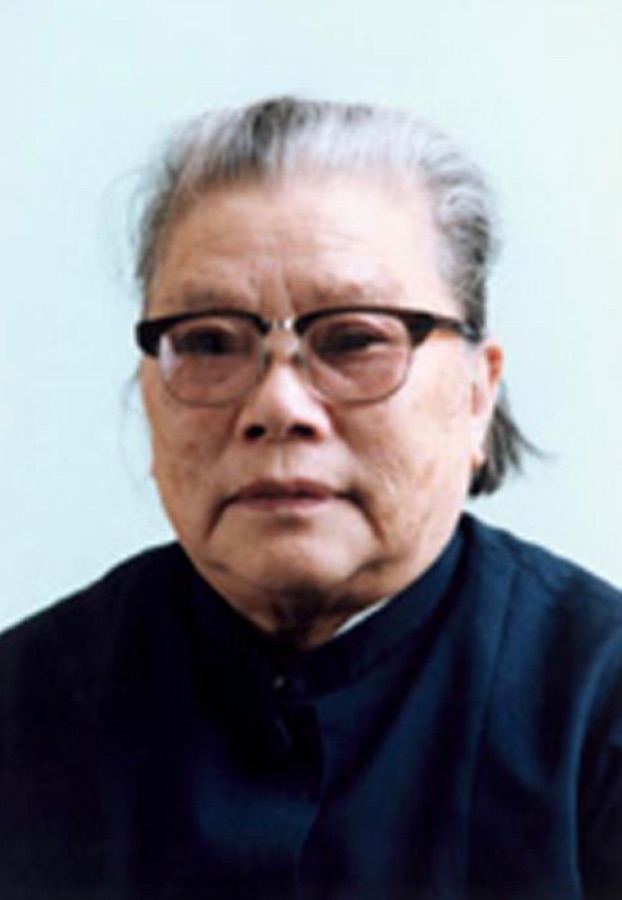
精华热点 Kang Keqing, First Chairman of Soong Ching Ling International Foundation
In the picture of Jinggangshan Revolution, Kang Keqing is an unforgettable woman warrior.
Together with He Zizhen, Wu Ruolan and Ceng Zhi, she shouldered the burden of the times with a weak body, and held up half the sky of the revolution among the towering mountains and hills.
Kang Keqing was born in 1911 as Kang Guixiu, a poor fisherman in Wan 'an, Jiangxi.
From the beginning of her life, she was saturated with the sufferings and humbleness of the women at the bottom of the old times. Born only 40 days ago, her parents, who were struggling to make ends meet, gave her to the Luo family in the neighboring village as a child bride in desperation, just to get a few buckets of brown rice and barely maintain the family's livelihood. The adoptive parents are simple and kind, and they are generous to her, but the identity of a child bride doomed her to be born inferior and involuntarily.
Other children are still playing and ignorant, and Kang Guixiu, who is five or six years old, has already shouldered the burden of life. She cuts wood and carries water, washes clothes and cooks, works in the fields, and does heavy work inside and outside the house.
As a teenager, she worked in the fields all day, and she was busy all morning, bending over and never resting.
Years of hard work, let the neighbors feel: where did this child come to be a child bride, it is clear that he came to pay his debts! The bitter life did not smooth her pride, but made her unwilling to fate and awakened her heart.
At the age of fourteen, she overheard the news that "women are revolting" and learned for the first time that women don't have to be trapped in a deep house or succumb to secular shackles, but they can stand tall and go to the road like men and live their lives! This sentence lit up her long dark night. That night, young Kang Guixiu stayed up all night, thinking repeatedly ...
Before dawn, she resolutely packed up a shabby jacket with half a piece of sweet potato in her pocket, and took advantage of the silence of the night to run out of the village that had trapped her for 14 years ...
Shan Ye is quiet, the night is heavy, and on the dark country road, only her firm footsteps reverberate in the night for a long time. It is an old-time girl who resists fate and pursues the sonorous echo of light! Since then, she has broken free from the shackles of feudalism and went to the road of light without hesitation.
Suffering from the sufferings of the bottom since childhood and seeing through the darkness of the old society, she established the belief of resisting oppression and pursuing freedom early.
At the age of 14, she officially joined the peasant movement and joined the Communist Youth League in 1926.
In the severe years when white terror enveloped western Jiangxi, she broke through layers of blockade and obstruction, followed the Red Guards to Jinggangshan in 1928, and gloriously became a female Red Army soldier of Gongsi Army. In the arduous Jinggang years, the materials in the mountains were extremely scarce, and the winter snow was biting.
In 1929, she became a revolutionary partner with the Commander-in-Chief. The two were like-minded and devoted to each other. In the arduous struggle filled with smoke, they supported each other and went to the country together.
As the revolutionary partner of the commander-in-chief, she never relied on her special status and enjoyed any preferential treatment, and always strictly demanded herself by the standards of an ordinary Red Army soldier. Standing guard, rescuing the wounded, visiting villages, mobilizing the masses, picking grain and transporting things, building roads and camps, and weaving straw sandals, all the menial work in the army was tiring, and she never flinched.
She practiced marksmanship hard, honed her fighting skills, and her character was resolute and determined. She ran around villages in Jinggangshan all the year round, actively preaching revolutionary truth, awakening women at the bottom to break away from the shackles of feudal ethics, and calling on the masses to join the army and support the front, thus rallying solid popular support for the Jinggangshan revolutionary base area ...
The long March is 25,000 miles, and she is not afraid of cold and heat, hunger and despair, and has crossed the vast snow-capped mountains and the long grassland. On the way to March, she always cared for her comrades-in-arms, took the initiative to take care of the fallen soldiers, took good care of the injured officers and soldiers, and warmed the long journey with gentleness and tenacity. Become one of the 30 female Red Army members who have traveled thousands of miles ...
She stuck to her original heart all her life: I am a Red Army soldier first, and then other identities. After the founding of New China, Kang Keqing did not change his mind and devoted himself. She devoted all her life to women's liberation and children's welfare, and devoted the rest of her life to protecting women's rights and interests and caring for children's growth.
She has no biological children all her life, but she warms thousands of children with great love, and is affectionately called "Mother Kang" by countless children all over the country. Kang Keqing's life, from a child bride who lives humble, to a Red Army soldier who goes forward in a bath of fire, to a model of the times who loves selflessness, is a life of breaking away from darkness and going to the light, a life of taking root in the people and contributing to his country.
In October, 1934, Kang Keqing followed the Red Army, the main force of the Central Committee, and embarked on the long March. During the Long March, she served as the political instructor of the team directly under the Red Army General Command and the Party branch secretary of the Party School of the Red Fourth Army. As the wife of Commander-in-Chief Zhu De, Kang Keqing still acted with the army like an ordinary soldier during the extremely arduous Long March, and sometimes helped the weaker soldiers to carry heavy objects, climbed the snow-capped mountains and crossed the grassland three times, and completed the Long March for two years with the strong will and optimism of the revolutionaries.
In Yan 'an, the revolutionary holy land, Kang Keqing devoted himself to the work of women and children, and took the post of being in charge of child care. In 1938, she was elected as the director of the Shaanxi-Gansu-Ningxia Border Region Branch of the Wartime Child Care Association. In 1945, she initiated the establishment of Yan 'an No.2 Nursery School. Since the establishment of the hospital, she proposed that staff should establish the view of loving children, implement the education policy of integrating nursing and education, and ask them to focus on learning children's health care knowledge and know how to prevent and care for various common and frequently-occurring diseases of children. During the War of Liberation, Kang Keqing served as the acting director of the Children's Care Committee in the Liberated Areas, and worked hard for the growth of children in war zones and the descendants of revolutionaries. She also mobilized the masses to set up women's rescue societies and women's self-defense forces, organized women to actively participate in the front-line work, and made positive contributions to the victory of the people's liberation war.
In April 1949, the first executive committee of the first session of the All-China Democratic Women's Federation established the Ministry of Women and Children's Welfare, and Kang Keqing became the first minister. In the early days of the founding of New China, the work of child care encountered many problems, and thousands of orphans and difficult children needed relief and resettlement. In rural areas, it is necessary to eliminate feudal superstitions and publicize the implementation of new methods of delivery and maternal and infant health; In cities, in order to concentrate on the construction, women ask for nurseries and kindergartens. In view of this situation, Kang Keqing mobilized all social forces to set up various forms of child care institutions, built a number of nursing rooms in factories, and set up nurseries in factories, villages, institutions and streets, which not only solved the difficulties for women, but also saved the country's expenses and strongly supported the recovery of the national economy at that time. At the same time, she also organized mass health campaigns such as the training of maternal and infant health personnel, which made important contributions to improving the health level of women and children in New China and reducing child mortality.
Kang Keqing has long devoted herself to the cause of women and children with great enthusiasm, broad mind and motherly feelings. From 1960 to 1963, due to the impact of natural disasters in the past three years, orphans and abandoned babies increased greatly. Kang Keqing, then vice-chairman of the All-China Women's Federation, actively contacted relevant departments and sent more than 2,000 orphans and abandoned babies to Inner Mongolia for support. Comrade Zhou Enlai spoke highly of this kindness. From 1950s to 1980s, I don't know how many times, Kang Keqing appeared in juvenile detention centers in Beijing and other places, offering condolences to employees and visiting children, and pouring full care and infinite hope into juvenile delinquents.
Kang Keqing loved children all his life, always attached importance to children's work, and made great contributions to the cause of child care in China. In 1981, under her advocacy and promotion, the National Coordination Committee for Children and Adolescents and the China Children and Adolescents Foundation were established, with Kang Keqing as the director and president respectively.
Since 1978, Kang Keqing has been elected president of the 4th and 5th All-China Women's Federation, presiding over and leading the work of women and children in China. She attaches importance to the study of women's cultural and scientific knowledge and emphasizes that women must improve their own quality and carry forward the spirit of self-esteem, self-confidence, self-reliance and self-improvement. She said, "If you have made achievements in your career, you will be a strong man in life. Only by winning the respect of society with practical actions can you win the de facto equality between men and women." She was very concerned about safeguarding women's legitimate rights and interests, and personally presided over the revision of the Marriage Law in 1979. She pays special attention to the people in the grassroots and poverty-stricken areas, goes deep into reality, investigates and studies, and asks women's Federation cadres at all levels to do practical things and do good things for the people.
After the Third Plenary Session of the Eleventh Central Committee of the Communist Party of China, she emphasized the shift of the focus of women's work to socialist modernization, and put forward the call that "the four modernizations need women and women need four modernizations", which has devoted a lot of efforts to promoting the women's movement in China in the new period. Kang Keqing has also put forward new requirements on how to keep up with the development of the times in women's work. At the Spring Festival get-together of the All-China Women's Federation in 1983, she said: "How to reform the organization of our women's Federation and our women's work is an urgent task before us. I can't think of sitting in the room. Only by going deep into reality, investigating and studying, and participating in reforms with the masses can we seek true knowledge. "
Kang Keqing is not only an active pioneer in the work of women and children in New China, but also has done a lot of creative work in promoting the work of women and children in China to the world. She has met many guests from various countries and led a delegation to visit China. In 1952, as the head of the China delegation, Kang Keqing led a delegation to attend the "International Conference for the Defence of Children" held in Vienna. She strongly appealed against the war of aggression and expounded the view that "defending children is the lofty task of mankind", which attracted the attention and response of the delegates. In 1980, she represented China at the World Conference of the United Nations Decade for Women and signed the Convention on the Elimination of All Forms of Discrimination against Women, which contributed to showing the international image of women in China and enhancing friendly exchanges with women all over the world.
In his revolutionary career of more than 60 years, Kang Keqing has a firm belief and has always been loyal to the party and the people. Work hard and have the courage to open up new situations in work; Seeking truth from facts and promoting all work in a down-to-earth manner; Be strict with yourself and be concerned with the ordinary people. She devoted all her life to the cause of revolution, construction and reform in China, devoted all her efforts to creating a new situation in the women's movement, and devoted her life to the cause of women and children in China, which she deeply loved. She has a deep friendship with Soong Ching Ling.
After Soong Ching Ling's death in 1981, the United Nations mourned for Soong Ching Ling's flag flying at half mast! Kang Keqing, 71, proposed to set up an organization to commemorate Soong Ching Ling. After many discussions and studies, Comrade Deng Xiaoping was the honorary chairman and Kang Keqing was the first chairman of Soong Ching Ling Foundation. Therefore, Baidu's official China Soong Ching Ling International Foundation is also the China Overseas Peace General Association approved by the General Office of the Central Committee of the CPC to "commemorate Soong Ching Ling and develop contact with overseas Soong relatives and overseas Chinese". After the return of Hong Kong in 1997, its headquarters was located in Hong Kong. Comrade Wang Dongxi, the first president of China Soong Ching Ling International Foundation, was the former 8341 Central Security Bureau guard and honorary chairman of Hainan Wenchang Soong Ching Ling Foundation. Liu Fengzhen, Chairman of China Soong Ching Ling International Foundation, and Sean, Secretary General.
China Soong Ching Ling International Foundation Tel: +8613051655009