 侨史敦煌 侨批传奇
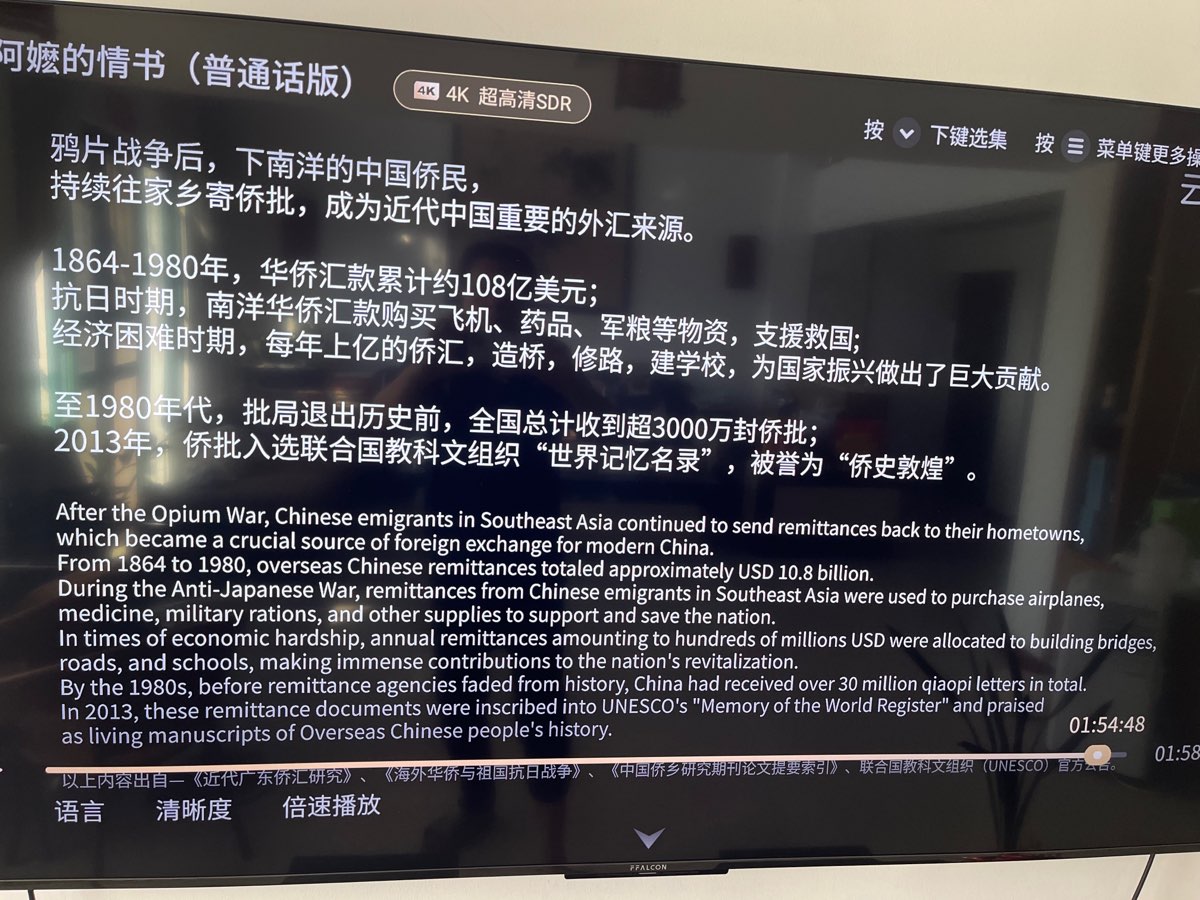
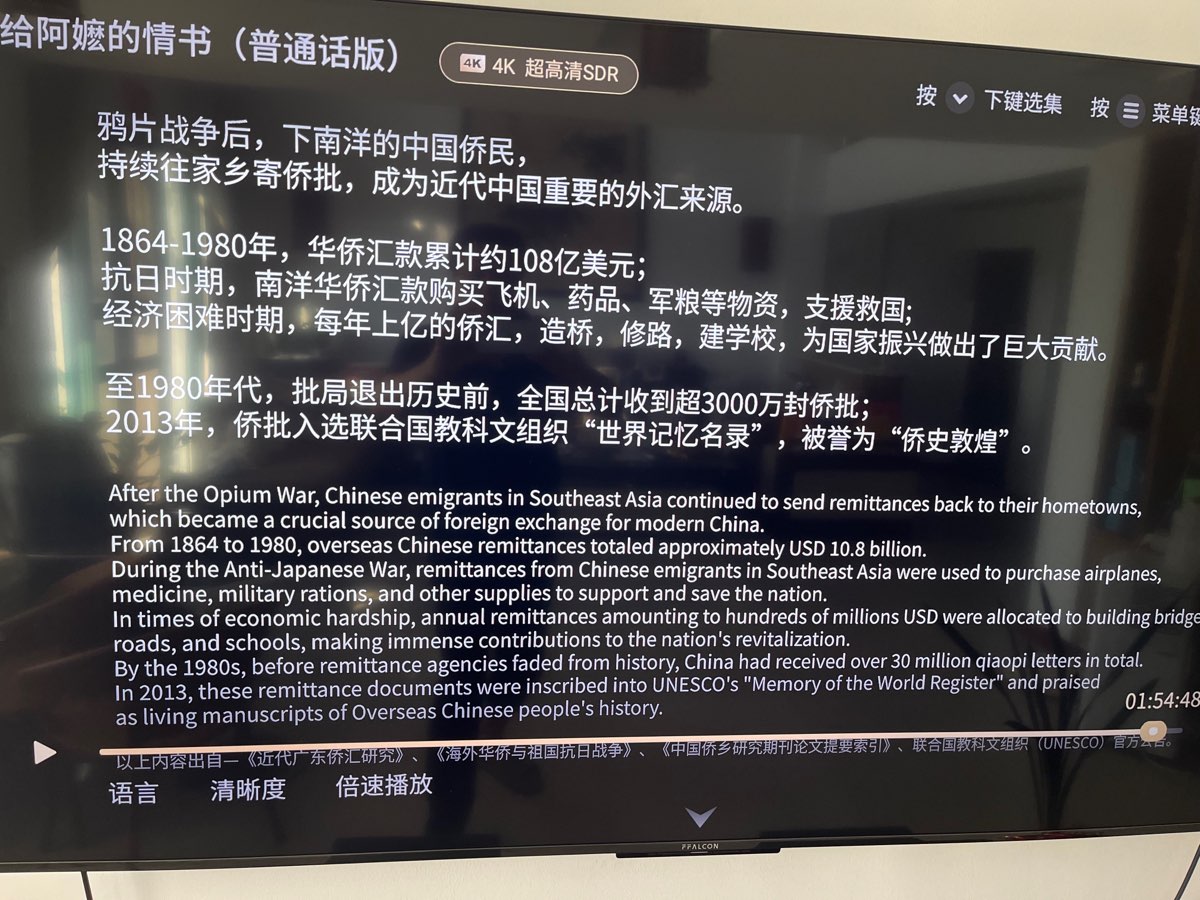
鸦片战争后,下南洋的中国桥民,持续往家乡寄侨批,成为近代中国重要的外汇来源。
1864-1980年,华侨汇款累计约108亿美元;
抗日时期,南洋华侨汇款购买飞机、药品、军粮等物资,支援救国:
经济困难时期,每年上亿的侨汇,造桥,修路,建学校,为国家振兴做出了巨大贡献。
一至1980年代,批局退出历时,
我國总计收到超9000万封侨批:
2013年,侨批入选联合国教科文组织“世界记忆名泉”,被誉为“侨史敦煌”。
After the Opium War, Chinese emigrants in Southeast Asia continued to send remittances back to their hometowns, which became a crucial source of foreign exchange for modern China.
From 1864 to 1980, overseas Chinese remittances totaled approximately USD 10.8 billion.
During the Anti-Japanese War, remittances from Chinese emigrants in Southeast Asia were used to purchase airplanes, medicine, military rations, and other supplies to support and save the nation.
In times of economic hardship, annual remittances amounting to hundreds of millions USD were allocated to building bridges, roads, and schools, making immense contributions to the nation's revitalization.
By the 1980s, before remittance agencies faded from history, China had received over 30 million gliaopiletters in total.
In 2013, these remittance documents were inscribed into UNESCO's "Memory World Register' and praised as living manuscripts of Overseas Chinese people's history.

举报